7 Kitchen Habits That Keep Your Food Fresh Longer
It happens in almost every kitchen. You buy a bag of groceries with good intentions, and a week later half of it is wilted, moldy, or sprouting in the back of the fridge.
Most food does not go bad because it was a bad product. It goes bad because of where and how it was stored. A few small changes to your routine can stretch your groceries noticeably further.
Here are seven habits worth building in.
1. Keep Potatoes and Onions in Separate Places
Potatoes and onions both need cool, dark storage, but keeping them together actually speeds up spoilage. Onions release a gas as they age that causes potatoes to sprout faster than they would on their own.
Store them in separate bins or bags, ideally somewhere dark and around room temperature rather than in the fridge, which can turn potato starch into sugar and affect their taste and texture.
2. Keep Bananas Away From Other Fruit
Bananas give off a gas called ethylene as they ripen, and that gas speeds up ripening in whatever fruit sits nearby. Store bananas separately if you want the rest of your fruit bowl to last longer.
Tip: If you actually want fruit to ripen faster, like a hard avocado or a green pear, put it in a paper bag with a banana on purpose.
3. Wrap Celery in Foil, Not Plastic
Celery wrapped in the plastic bag it came in tends to go limp within a few days, since the plastic traps moisture against the stalks. Wrapping it in aluminum foil instead lets a little moisture escape while still protecting it, which keeps it crisp for weeks instead of days.
4. Store Eggs on a Shelf, Not the Door
The egg holder built into most refrigerator doors is convenient, but it is also the warmest part of the fridge since it gets a blast of room temperature air every time the door opens. Keep eggs in their carton on an interior shelf instead, where the temperature stays more consistent.
Tip: Keeping eggs in the carton also protects them from absorbing odors from other food in the fridge.
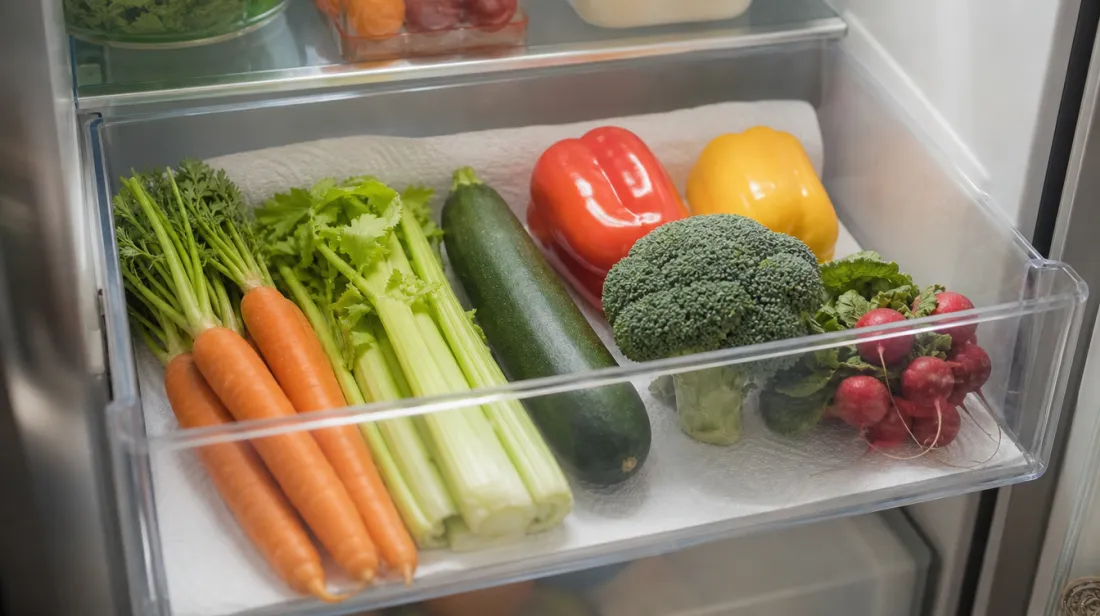
5. Line Your Crisper Drawer With a Paper Towel
Vegetables release moisture as they sit, and that moisture pooling in the bottom of the crisper drawer speeds up rot. A paper towel laid in the bottom of the drawer absorbs that extra moisture and keeps vegetables from sitting in a damp environment.
Swap the towel out whenever it gets noticeably damp.
6. Wait to Wash Berries Until You Are Ready to Eat Them
Washing berries as soon as you bring them home feels responsible, but the added moisture actually speeds up mold growth while they sit in the fridge. Keep berries dry and unwashed in their container, and rinse only the amount you are about to eat.
Tip: If you want to wash a whole batch at once anyway, dry them completely with paper towels before storing to remove excess moisture.
7. Keep Bread in a Cool, Dry Spot, Not the Fridge
The fridge feels like it should keep bread fresh longer, but the cold temperature actually speeds up the staling process, making bread go dry and crumbly faster than it would at room temperature. A bread box, a paper bag, or a cupboard away from direct sunlight works better for bread you plan to eat within a few days.
If you will not finish a loaf soon, the freezer is a better option than the fridge, since freezing pauses staling instead of speeding it up.
Check Your Fridge Temperature Once in a While
A refrigerator that runs too warm speeds up spoilage across everything inside it, not just one item, but a lot of people never actually check the temperature and rely on guesswork. A simple fridge thermometer, kept on a middle shelf, tells you right away if your fridge is running warmer than it should.
The ideal range for a refrigerator is generally between 35 and 38 degrees Fahrenheit. Running even a few degrees above that can shorten how long everything inside stays fresh.
Tip: Avoid packing the fridge too full, since air needs room to circulate around food to keep the temperature even throughout.
Give Leftovers Room to Cool Before Sealing Them Up
Sealing a hot container of leftovers and placing it straight in the fridge can raise the temperature of everything around it and create condensation inside the container, which speeds up spoilage. Let food cool on the counter for a short while first, then store it once it is closer to room temperature.
Do not leave it out too long, though. A general rule is to get food into the fridge within about two hours of cooking.
The Bottom Line
Keeping food fresh longer is rarely about buying pricier groceries or fancy containers. It usually comes down to where in the kitchen you put things, what temperature they are stored at, and what you store them next to.
Try shifting a few of these habits this week, and you will likely notice less food going to waste by the time you shop again.